
The Story of Kisā Gotamī: A Mustard Seed Ritual for Pregnancy and Baby Loss
For Baby Loss Awareness Week, I wanted to share a Buddhist story about grief, remembrance and our connection to others who have experienced loss, alongside a ritual I've created for honouring a pregnancy or baby after loss. Pregnancy and baby loss can be profoundly isolating. Whether someone has experienced miscarriage, stillbirth or the death of a baby, the world around them often seems to continue as normal while their own world has changed completely.
Throughout history, communities have used rituals to acknowledge death, honour those who have died and create space for grief.One story that has stayed with me is the Buddhist story of Kisā Gotamī and the mustard seed. It has inspired me to think about how we can use simple, everyday objects to create meaningful rituals of remembrance, particularly within postnatal care following pregnancy and baby loss.
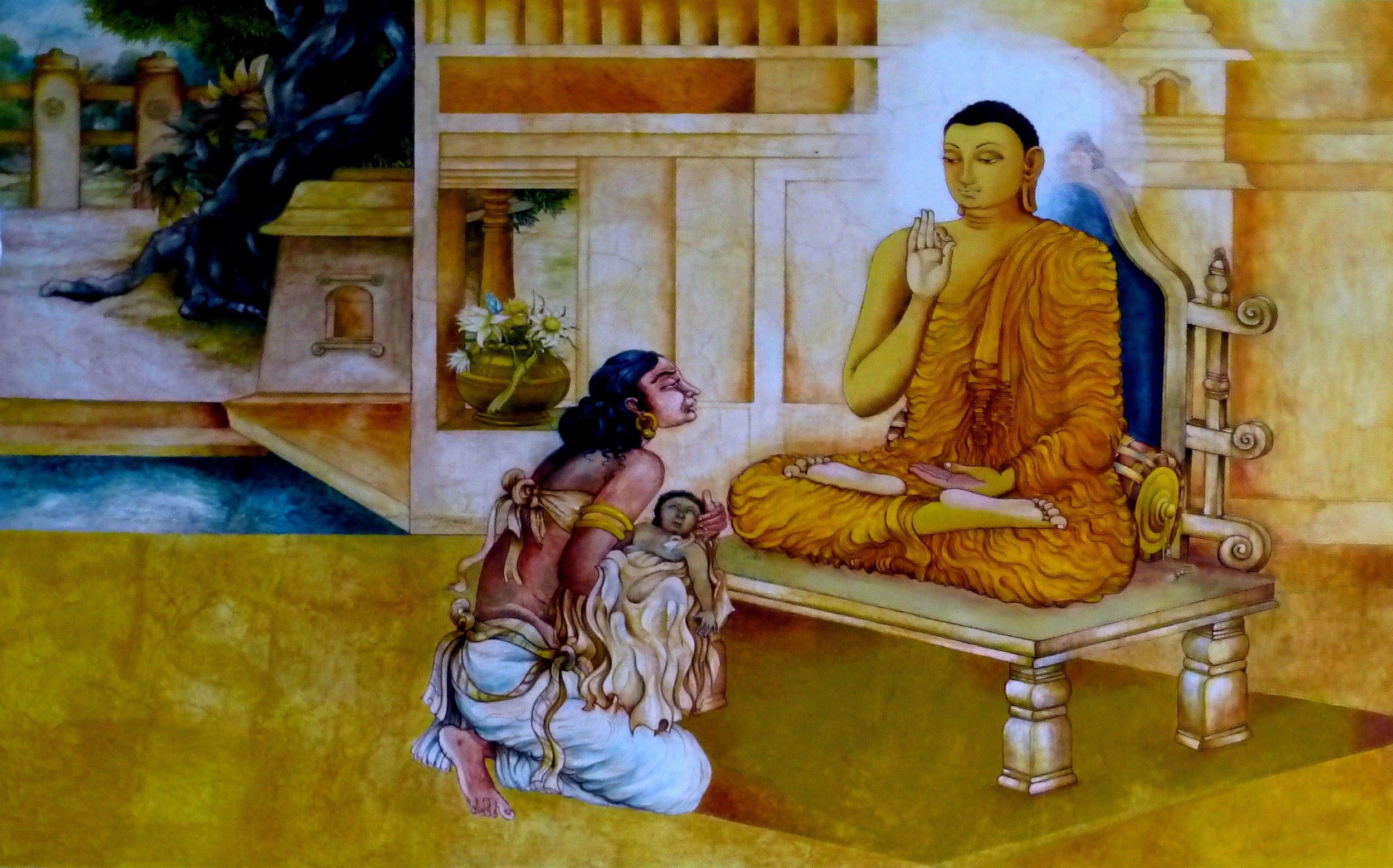
The Story of Kisā Gotamī and the Mustard Seed
Kisā Gotamī was a woman living during the time of the Buddha. According to Buddhist tradition, her young child died, leaving her overwhelmed by grief. Unable to accept his death, she carried her child's body from house to house, desperately searching for someone who could provide medicine to bring him back to life. Eventually, she was directed to the Buddha. The Buddha listened to her and instructed her to bring him a handful of mustard seeds. However, there was one condition: the mustard seeds had to come from a household in which no one had ever died.
Kisā Gotamī began knocking on doors. Mustard seeds were easy to find. They were an ordinary household ingredient, and people were willing to give them to her. But when she asked whether anyone in the household had ever died, every family had a story to tell. Some had lost parents. Others had lost children, partners, siblings or relatives. She travelled from house to house, but could not find a single family untouched by death.As she listened to the experiences of others, something began to change.
She came to understand that although her grief was deeply personal, death was an experience shared by all human beings. Kisā Gotamī returned without the mustard seeds. In the traditional Buddhist telling, this encounter becomes an important step in her understanding of impermanence and the Buddha's teachings on suffering. For me, the story also offers a powerful reflection on the relationship between individual grief and our shared human experience of loss.
Her loss remained uniquely hers. But she was not alone in knowing grief.
Pregnancy and Baby Loss: When the World Carries On
There is something particularly poignant about Kisā Gotamī's story when thinking about pregnancy and baby loss. After a miscarriage, stillbirth or the death of a baby, someone can feel as though the world around them has continued without acknowledging what has happened. Other pregnancies progress. Babies are born. Friends return to their routines. Everyday conversations continue. Meanwhile, the person who has experienced the loss is navigating an entirely different reality.
There can also be a physical dimension to this experience that is overlooked. The body can continue to undergo hormonal changes, bleeding, breast or chest changes, milk production and physical recovery, depending on the stage of pregnancy and circumstances of the loss. Yet the care and rituals we associate with the postnatal period are not always extended to people whose pregnancies have ended in loss.
The body still deserves tenderness, rest and care.
Ritual offers one way to acknowledge both the emotional and physical experiences of loss. It doesn't have to provide answers, create closure or make grief disappear. Sometimes it simply creates a moment in which what happened is recognised and remembered.
Creating a Mustard Seed Ritual for Pregnancy and Baby Loss
Inspired by the story of Kisā Gotamī, I've created a simple ritual using mustard seeds as a symbol of remembrance and connection. This is a contemporary ritual inspired by a Buddhist story, not a traditional Buddhist ritual. The mustard seeds represent our connection to the many people, families and generations who have experienced death and loss.The ritual also creates space to acknowledge a particular pregnancy or baby, rather than allowing the universality of grief to overshadow someone's individual experience. It can be performed alone, with a partner, with family or with the support of a doula or another trusted person.Massage can also be incorporated as a way of bringing care and attention to the body following pregnancy or baby loss. There is no requirement to include every element. Adapt the ritual to your own beliefs, circumstances and relationship with the pregnancy or baby you are remembering.
How to Perform the Mustard Seed Ritual
1. Prepare your space
Find a quiet, comfortable space where you feel safe and won't be disturbed.
Gather:
A small bowl
A handful of mustard seeds
A candle
A photograph, scan, flower or meaningful object, if you have one
A skin-appropriate massage oil, if you are including massage
Place the bowl and mustard seeds in front of you.
Arrange any meaningful objects nearby.
You don't need a physical keepsake for the ritual to be meaningful.
2. Light the candle
Light the candle and take a moment to settle into the space.
Bring your attention to the pregnancy or baby you are remembering.
Speak your baby's name if they have one and you want to say it.
You can also acknowledge the pregnancy without using the word baby or giving it a name.
There is no particular way you need to feel.
Allow yourself to arrive exactly as you are.
3. Hold the mustard seeds
Take a small handful of mustard seeds and hold them in your hands.
Notice their texture and weight.
Remember the story of Kisā Gotamī travelling from house to house, discovering that every household had experienced death.
Think of the many people across generations who have experienced pregnancy and baby loss.
People who have carried pregnancies that ended too soon.
People who have given birth to babies who died.
People who have grieved children whose lives were much shorter than they had hoped.
You are part of a human community that has loved and grieved before you.
4. Remember your pregnancy or baby
Now bring your attention back to your own experience.
Slowly place the mustard seeds into the bowl.
As you do, say:
You were here.
You are remembered.
My grief is witnessed.
Use your own words if these don't feel right.
Spend as much time here as you need.
There is no expectation to feel comforted or to experience a particular emotional response.
5. Offer care to the body through massage
Pregnancy and baby loss are not only emotional experiences. They are also experienced through the body.
If you wish to incorporate massage, begin slowly and gently, using an oil that is appropriate for your skin.
Massage your hands, arms, shoulders or feet, or receive massage from a trusted person.
Let the touch acknowledge the body that has carried this experience.
You can bring your attention to the different parts of your body and the care they deserve.
There is nothing here that needs to be fixed.
Massage should only be included when physically appropriate. If you are recovering from miscarriage, birth, surgery or complications, seek guidance from your maternity or healthcare team before receiving massage. Avoid areas that are painful, injured or healing. Massage is not necessary for the ritual.
The mustard seeds are used symbolically rather than applied to the skin. Mustard seed oil is not required.
6. Rest and make space for grief
After the massage, take some time to rest. You can sit quietly, cry, talk, listen to music or simply remain with the candle and bowl of seeds. You don't have to feel peaceful. You can feel angry, numb, relieved, devastated or several things at once. Grief doesn't follow a particular sequence, and rituals don't need to produce a particular emotional outcome.
Let this be a space where nothing is demanded of you.
7. Close the ritual
When you are ready, return your attention to the bowl of mustard seeds.
Place your hands around it and take a final moment of remembrance.
Say:
You were here.
You are remembered.
My grief is witnessed.
My body deserves tenderness.
Blow out the candle.
Choose what feels meaningful to do with the mustard seeds.
You can keep them somewhere special, place them beside a photograph or keepsake, or return them to the earth in a way that is appropriate for your surroundings.
There is no correct ending.
Ritual Doesn't Have to Mean Closure
One of the things I find important about creating rituals around pregnancy and baby loss is recognising that grief doesn't necessarily have an endpoint. There can be pressure to move on, find meaning in what happened or eventually feel ready to let go. But remembrance doesn't have to mean letting go. A ritual can simply acknowledge that a pregnancy existed, a baby was loved, a relationship mattered or an experience changed someone's life. It can also create space for the body to receive care without expecting that care to resolve the grief. For some people, this ritual will be about remembering a baby who died. For others, it will be about acknowledging a pregnancy, a hoped-for future, or an experience of loss that is difficult to put into words. All of these experiences deserve compassion.
What Kisā Gotamī's Story Teaches Us About Grief
Kisā Gotamī went searching for mustard seeds from a household untouched by death. She discovered there wasn't one. The Buddhist story speaks to the universality of death, impermanence and suffering. But it also invites us to reflect on how grief connects us to others. Recognising that other people have experienced loss doesn't diminish the significance of our own. We don't have to compare our experiences or find comfort in the idea that others have suffered too. Instead, we can acknowledge that grief is part of a wider human experience, while still honouring the particular person, pregnancy or relationship we are remembering.
This Baby Loss Awareness Week, I'm holding in mind everyone whose experience of pregnancy, birth and parenthood has included loss, whether recent or many years ago.
Your loss is uniquely yours. And you do not grieve alone.
If you're navigating pregnancy or baby loss, you deserve compassionate support that respects your experience, your body and the way you choose to grieve. Ritual is one form of care, but it isn't a replacement for medical or specialist bereavement support when that is needed.